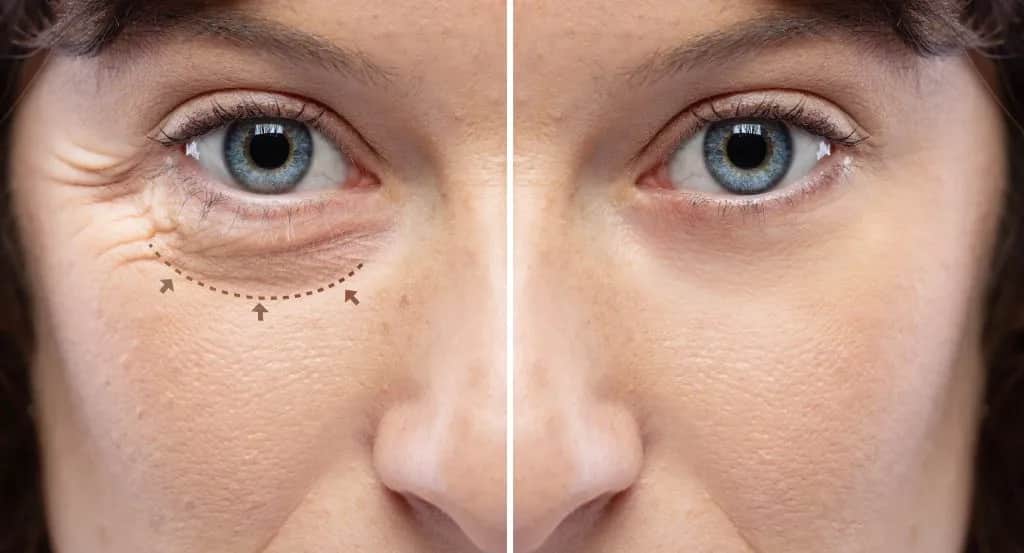
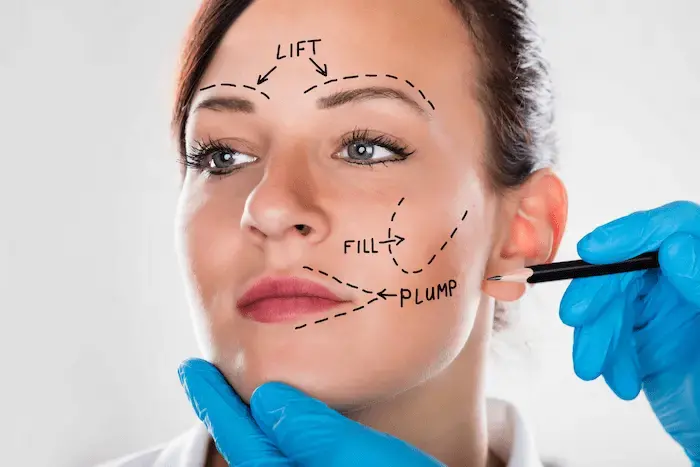

Facelift Surgery in Busan, South Korea can address sagging facial and neck tissues, jowls, and loss of jawline definition. Treatment options include SMAS, deep-plane, mini, lower facelift, and neck lift procedures. Costs and recovery vary according to surgical technique, complexity, anesthesia, surgeon experience, and postoperative care.
BusanSkinClinic.net
If you are considering facelift surgery in Busan, South Korea, the most important decision is not simply which clinic offers the lowest price. A facelift is a surgical procedure that repositions aging facial and neck tissues, and the appropriate technique depends on the degree of skin laxity, tissue descent, neck changes, facial anatomy, skin quality, previous procedures, and the result you want to achieve.
In Busan, patients may encounter procedures described as SMAS facelift, deep-plane facelift, mini facelift, lower facelift, neck lift, or combined facelift and neck lift. These terms refer to different surgical approaches rather than a simple ranking from “basic” to “advanced.” Current evidence does not show that one technique is universally best for every patient. A 2025 systematic review and meta-analysis found high satisfaction with both SMAS and deep-plane approaches, while a 2026 prospective cohort study found no significant short-term differences in satisfaction, recovery duration, or overall complications between deep-plane and SMAS plication techniques.
Facelift surgery in Busan can be an appropriate option for people with noticeable facial or neck laxity who want a more substantial and durable surgical correction than non-surgical treatments can provide. The total cost varies substantially because the procedure may include different surgical layers, anesthesia, operating-room fees, hospitalization or monitoring, medications, postoperative care, and additional procedures such as a neck lift or fat grafting.
For international patients, the practical considerations extend beyond the operation itself. You should evaluate the surgeon’s facelift experience, the exact technique proposed, anesthesia and emergency arrangements, postoperative follow-up, communication support, and how long you can remain in Korea for recovery.
Table of Contents
What Is a Facelift?
A facelift, medically known as rhytidectomy, is surgery designed to improve visible signs of aging in the face and, depending on the procedure, the neck.
Facial aging is not caused by loose skin alone. Over time, several changes occur simultaneously:
- Skin loses elasticity.
- Facial soft tissue descends.
- The cheeks and midface change position.
- The jawline becomes less defined.
- Jowls may develop.
- Neck skin and underlying tissues may become lax.
- Facial fat compartments can lose volume or shift.
This is why simply pulling the skin tighter does not necessarily produce a natural or durable result.
Modern facelift surgery can involve repositioning deeper soft tissues, tightening or repositioning the superficial musculoaponeurotic system (SMAS), treating the platysma in the neck, removing limited excess skin, and sometimes combining the procedure with fat grafting or other facial procedures.
Importantly, a facelift does not stop the aging process and does not fundamentally change someone’s identity or facial structure. The American Society of Plastic Surgeons notes that facelift surgery is intended to address visible aging rather than prevent future aging.
Why Consider Busan for Facelift Surgery?
Busan is South Korea’s second-largest city and has an established medical-tourism infrastructure. The Korean government’s Medical Korea directory lists registered medical institutions in Busan, including plastic-surgery clinics that provide services for international patients.
Some Busan facilities also provide multilingual interpretation and international-patient services. For example, Medical Korea’s information on accredited institutions includes Busan plastic-surgery facilities offering interpretation and international-patient support.
However, being located in Busan—or being listed in an international-patient directory—is not by itself evidence that a particular surgeon is the best choice for facelift surgery.
When comparing clinics, look beyond location and marketing. Ask:
- Who will perform the operation?
- How frequently does the surgeon perform facelifts?
- Which facelift techniques does the surgeon routinely use?
- Why is a particular technique recommended for your anatomy?
- What happens if a postoperative complication occurs?
- How long will postoperative monitoring continue?
- Is an English-speaking coordinator or interpreter available?
- Where will follow-up examinations take place?
- What exactly is included in the quoted price?
Facelift Techniques in Busan: SMAS vs. Deep Plane and More
One of the most common questions is:
Which facelift technique is best?
There is no universally correct answer.
1. SMAS Facelift
The SMAS is a connective-tissue layer beneath the skin that is important in facial soft-tissue support.
SMAS-based facelifts can use several approaches, including:
- SMAS plication
- SMAS imbrication
- SMASectomy
- SMAS flap techniques
- High-lateral SMAS techniques
The purpose is generally to improve the position of deeper facial tissues rather than relying exclusively on tension in the skin.
Evidence reviews have found that multiple SMAS techniques can provide good aesthetic outcomes, but there is insufficient evidence to declare one technique universally superior.
2. Deep-Plane Facelift
A deep-plane facelift works in a deeper anatomical plane and releases or repositions selected facial retaining structures to allow movement of the deeper facial soft tissues.
It is often discussed in relation to:
- Midface descent
- Nasolabial folds
- Jowls
- Lower-face laxity
- Jawline definition
A 2026 systematic review and meta-analysis involving 10,784 patients reported a pooled overall complication rate of 6.6% for deep-plane facelifts, although the authors emphasized the need for further standardized research and long-term follow-up.
This should not be interpreted as meaning that deep plane is automatically safer or better than SMAS for an individual patient.
A separate 2025 meta-analysis of 21 studies involving 2,896 patients found high patient satisfaction for both deep-plane and SMAS facelifts. The reported complication rate was higher in the deep-plane group in that analysis, illustrating why technique comparisons should be interpreted carefully rather than reduced to a simple “best technique” ranking.
3. Mini Facelift
A mini facelift generally involves a more limited surgical correction than a traditional full facelift.
It may be considered when the primary concern is relatively localized or mild-to-moderate lower-face laxity.
It is not simply a cheaper version of a full facelift.
Someone with substantial neck laxity or significant tissue descent may require a different operation.
4. Lower Facelift and Neck Lift
When aging is concentrated around the lower face and neck, a surgeon may recommend a lower facelift, neck lift, or combined procedure.
Potential concerns include:
- Jowls
- Loose jawline
- Submental laxity
- Neck skin excess
- Platysmal banding
- Poor cervicomental definition
The exact operation depends on whether the problem is primarily skin, deeper tissue, muscle/platysma, fat distribution, or a combination.
How Much Does Facelift Surgery Cost in Busan?
There is no single medically meaningful “Busan facelift price.”
A clinic’s quoted price can change significantly according to the technique and the patient’s surgical plan. Publishing an unsupported single price range can therefore be misleading.
A facelift quotation may depend on:
| Cost factor | Why it matters |
|---|---|
| Facelift technique | Different procedures require different surgical work |
| SMAS or deep-plane work | Changes operative complexity |
| Neck lift | May require additional surgical treatment |
| Anesthesia | Fees vary according to anesthesia and monitoring |
| Operating-room fees | Facility and surgical time affect the total |
| Hospital stay | Some patients may require overnight observation |
| Medications | Prescription and postoperative medications may be separate |
| Follow-up | Number and duration of postoperative visits matter |
| Additional procedures | Fat grafting, eyelid surgery, or other procedures can increase cost |
| Revision surgery | More complex than primary surgery |
Therefore, if you are comparing facelift surgery costs in Busan, ask for an itemized quotation, not simply a headline promotional price.
A useful question is:
“Does this price include the surgeon’s fee, anesthesia, operating-room charges, medications, postoperative visits, drains, dressings, and any overnight monitoring?”
For international patients, also clarify whether interpretation, airport transportation, accommodation assistance, or other medical-tourism services are included.
Medical Korea’s directory shows that international-patient services can vary between facilities, so these services should be confirmed directly rather than assumed.
Facelift Recovery: What Should You Expect?
Recovery is one of the most important factors for anyone traveling to Busan for surgery.
The immediate postoperative period commonly involves:
- Swelling
- Bruising
- Tightness
- Temporary numbness
- Mild-to-moderate discomfort
- Temporary facial stiffness
The NHS states that complete recovery can take approximately 2 to 4 weeks, while bruising can remain visible for at least two weeks and final results may continue developing for 6 to 9 months.
The exact timeline varies considerably between patients and procedures.
Typical recovery progression
First few days
Swelling and bruising are usually most noticeable. The face may feel tight or numb.
Around 1–2 weeks
Some sutures may be removed during this period depending on the surgical technique. Bruising generally begins to improve substantially.
Around 2–4 weeks
Many patients can gradually return to routine activities, although residual swelling may remain.
Several months
Facial tissues continue settling. Subtle asymmetry and swelling can continue to improve.
Around 6–9 months
The final appearance may become clearer, although individual healing varies.
The American Society of Plastic Surgeons also emphasizes that postoperative instructions—including wound care, medications, dressings, drains, and activity restrictions—should be individualized by the operating surgeon.
How Long Should International Patients Stay in Busan?
If you are traveling from another country, do not plan your trip around the shortest possible recovery timeline.
A safer approach is to allow sufficient time for:
- Preoperative consultation
- Medical testing
- Surgery
- Initial postoperative observation
- Drain or dressing management
- Early follow-up appointments
- Assessment before flying home
Your surgeon should determine when air travel is appropriate based on your individual recovery.
For international patients, the postoperative plan is just as important as the operation itself.
Before booking flights, ask the clinic:
“How many postoperative appointments do you recommend before I return home?”
Also ask what happens if you develop swelling, bleeding, infection, wound problems, or other unexpected symptoms after leaving Korea.
Facelift Risks and Complications
Facelift surgery is elective surgery, but it is still major surgery.
Potential complications include:
- Bleeding or hematoma
- Infection
- Seroma or fluid accumulation
- Poor wound healing
- Skin necrosis
- Numbness or altered sensation
- Facial nerve weakness or injury
- Scarring
- Hair loss around incisions
- Asymmetry
- Prolonged swelling
- Blood clots and anesthesia-related complications
The American Society of Plastic Surgeons specifically identifies bleeding, infection, fluid accumulation, facial nerve injury, sensory changes, wound-healing problems, scarring, prolonged swelling, and cardiopulmonary or thromboembolic complications among possible facelift risks.
This is why a clinic’s marketing claims should never replace a proper medical consultation.
South Korea’s Medical Act also restricts medical advertising that is false, exaggerated, misleading, or omits important information about serious adverse effects.
Who May Be a Candidate for Facelift Surgery?
A consultation is necessary to determine candidacy, but facelift surgery may be considered when a person has:
- Noticeable jowling
- Significant lower-face laxity
- Loose neck skin
- Descent of facial soft tissues
- Loss of jawline definition
- Aging that cannot be adequately addressed by non-surgical treatments
A facelift is generally less appropriate as a solution for isolated skin texture problems, pigmentation, fine surface lines, or mild volume loss.
In those situations, other treatments may be more appropriate or may complement surgery.
The key question is not:
“Am I old enough for a facelift?”
It is:
“Are my current anatomical changes better addressed by surgery than by less-invasive treatments?”
That distinction is much more useful when making a treatment decision.
Facelift vs. Non-Surgical Treatments
A common misconception is that fillers, energy-based treatments, or thread procedures are interchangeable with a facelift.
They are not.
A facelift primarily addresses tissue descent and laxity.
Other treatments may target:
- Volume loss
- Skin texture
- Pigmentation
- Fine lines
- Mild laxity
For some patients, a combination may make sense. For others, additional treatments can add complexity without addressing the primary cause of their concern.
The American Society of Plastic Surgeons notes that nonsurgical treatments cannot achieve the same result as surgical facelift correction, although they may complement surgery or delay the point at which surgery becomes appropriate.
How to Choose a Facelift Surgeon in Busan
Instead of choosing a clinic based primarily on price, use a structured checklist.
1. Look at facelift-specific experience
A surgeon may perform many cosmetic procedures but relatively few facelifts.
Ask specifically about facelift surgery.
2. Understand the proposed anatomy
The surgeon should explain what is causing your aging appearance:
- Skin laxity?
- SMAS descent?
- Midface descent?
- Jowls?
- Neck laxity?
- Volume loss?
3. Ask why the technique was selected
Do not accept “deep plane is better” or “SMAS is safer” as a complete explanation.
Ask:
“Why is this technique appropriate for my facial anatomy?”
4. Review representative results
Before-and-after photographs can be useful, but they should be interpreted carefully. Patient anatomy, lighting, photography, expression, and follow-up time can all affect how results appear.
5. Ask about complications
A trustworthy consultation should discuss risks rather than promise a perfect result.
6. Confirm postoperative care
Especially important for overseas patients.
7. Verify credentials and facility information
For international patients, official Korean medical resources can help verify whether a facility is registered to treat international patients. Medical Korea maintains directories of registered and accredited institutions.
Questions to Ask During a Busan Facelift Consultation
Save these questions before your appointment:
- What type of facelift do you recommend for me?
- Why is this technique appropriate for my anatomy?
- Will you treat the SMAS, deep plane, platysma, or primarily the skin?
- Do I need a neck lift as well?
- What type of anesthesia will be used?
- Will I stay overnight?
- What complications are most relevant to me?
- How long should I stay in Busan after surgery?
- When can I safely fly home?
- How many follow-up visits are included?
- What exactly is included in the quoted cost?
- Who should I contact if I develop a problem after returning home?
These questions are more valuable than simply asking which clinic has the cheapest facelift.
Is Facelift Surgery in Busan Worth Considering?
For the right patient, Busan can be a reasonable location to explore facelift surgery, particularly for people who value access to established medical facilities and international-patient services.
But the decision should be based on surgeon experience, anatomical assessment, surgical technique, safety systems, postoperative care, communication, and transparent pricing—not simply the city or advertised procedure name.
Current evidence supports both SMAS and deep-plane approaches, but comparative research remains imperfect. A 2025 systematic review found strong satisfaction with both techniques, while a 2026 prospective study found comparable short-term outcomes between deep-plane and SMAS plication.
That means the most useful question is not:
“Is a deep-plane facelift better than a SMAS facelift?”
It is:
“Which surgical approach best addresses my specific pattern of facial and neck aging, and why?”
That is the question a qualified facelift surgeon should be able to answer during an individualized consultation.
FAQs
How much does Facelift Surgery in Busan cost?
The cost of Facelift Surgery in Busan varies according to the surgical technique, procedure complexity, anesthesia, operating-room fees, postoperative care, and additional treatments. Facelift Cost in Busan should therefore be compared using an itemized quotation rather than a promotional starting price.
Is an SMAS Facelift or Deep Plane Facelift better in Busan?
There is no universally superior technique. SMAS Facelift Busan and Deep Plane Facelift Busan procedures address facial aging through different anatomical approaches. The appropriate technique depends on tissue laxity, facial anatomy, neck changes, previous procedures, and the surgeon’s assessment.
How long is recovery after Facelift Surgery in Busan?
Recovery after Facelift Surgery in Busan commonly takes several weeks for significant swelling and bruising to improve, although subtle swelling and tissue maturation can continue for months. Patients traveling internationally should allow sufficient time for postoperative examinations before flying home.
What does a facelift treat in South Korea?
A facelift in South Korea can address facial and neck laxity, jowls, loose skin, descended soft tissue, and reduced jawline definition. It is not primarily designed to correct pigmentation, skin texture, or isolated fine lines, which may require different or complementary treatments.
How should I choose a surgeon for Facelift Surgery in Busan?
When choosing a surgeon for Facelift Surgery in Busan, evaluate facelift-specific surgical experience, credentials, the recommended technique, safety and anesthesia protocols, before-and-after results, postoperative follow-up, international-patient support, and the complete treatment cost. The surgeon should clearly explain why the proposed technique suits your anatomy.
Final Takeaway
Facelift surgery in Busan, South Korea, should be approached as individualized reconstructive-style facial rejuvenation surgery rather than a standardized cosmetic package. The best procedure depends on the patient’s anatomy, degree of tissue laxity, facial proportions, neck changes, skin quality, medical history, and aesthetic goals.
For anyone comparing Busan facelift clinics, the strongest decision-making framework is:
Diagnosis → Surgical technique → Surgeon experience → Safety → Recovery plan → Total cost → Long-term follow-up
Price matters, but it should come after understanding exactly what operation is being proposed and who will perform it.
Because facelift surgery carries meaningful surgical risks, an in-person examination and individualized consultation are essential before making a treatment decision. This article is for educational purposes and does not replace evaluation by a qualified plastic surgeon.
Reference
- American Society of Plastic Surgeons (ASPS) — Facelift Surgery
Overview of facelift indications, what the procedure can and cannot achieve, and complementary treatments.
ASPS — Facelift Surgery - American Society of Plastic Surgeons — Facelift Risks & Safety
Useful for evidence-based discussion of bleeding, infection, nerve injury, wound healing, scarring, swelling, anesthesia risks, and thromboembolic complications.
ASPS — Facelift Risks and Safety - NHS — Facelift (Rhytidectomy)
Provides patient-oriented information on the procedure, typical recovery of approximately 2–4 weeks, bruising, activity restrictions, and the longer timeline for final results.
NHS — Facelift