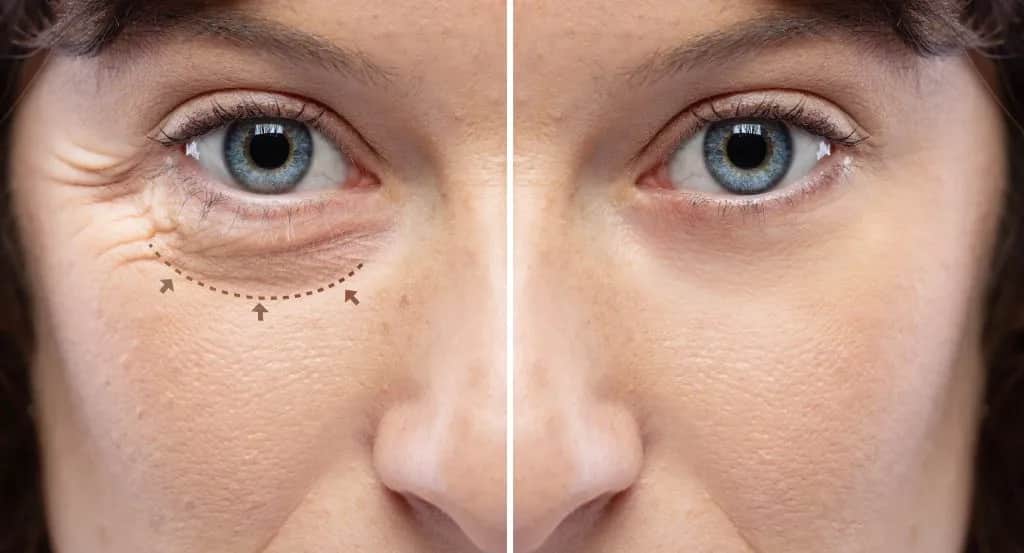
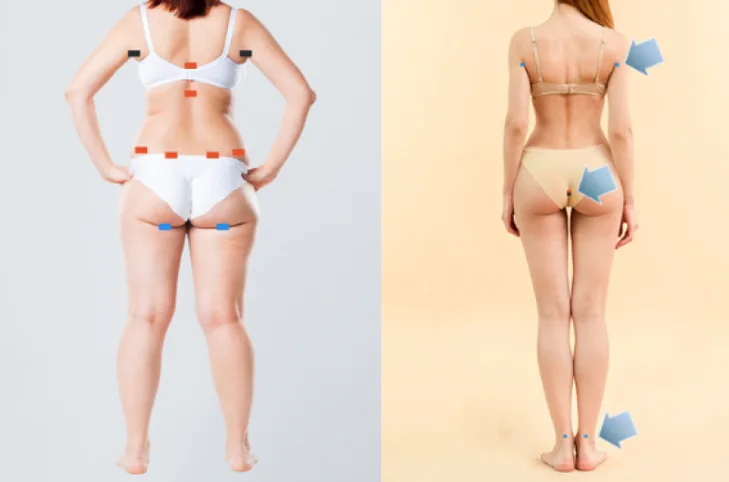

Liposuction and facial fat grafting in Busan, South Korea can combine localized body contouring with facial volume restoration. Liposuction removes selected fat deposits, while processed fat may be transferred to areas of the face requiring additional volume. Cost, suitability, techniques, risks, and recovery depend on the individual treatment plan.
BusanSkinClinic.net
Liposuction and facial fat grafting in Busan, South Korea can combine body contouring with facial volume restoration: excess fat is removed from selected body areas and, when clinically appropriate, processed and transferred to areas of the face that need additional volume. The approach can be useful for patients who want to address localized fat deposits and facial volume loss during a coordinated surgical plan. However, candidacy, safety, cost, and the amount of fat that can be successfully retained must be assessed individually.
Liposuction is primarily a body-contouring procedure, not a weight-loss treatment, while facial fat grafting is used to restore or enhance facial volume. The two procedures can sometimes be performed during the same surgical session, but combining them does not automatically make the treatment better or safer. The surgeon must consider operative time, anesthesia, medical history, donor-site anatomy, facial anatomy, and postoperative care.
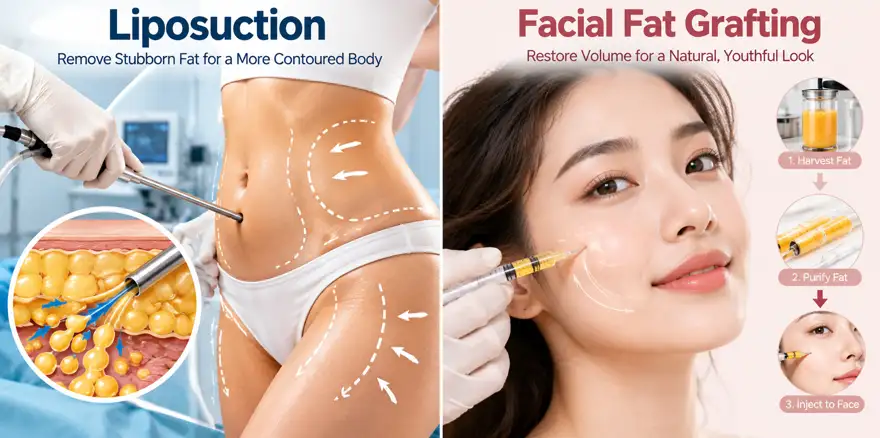
Liposuction removes localized fat from areas such as the abdomen, waist, thighs, hips, or arms. Facial fat grafting uses a patient’s own harvested fat, which is processed and carefully injected into selected facial areas to restore volume or improve contour. When combined, the procedures can address both unwanted body fat and facial volume deficiency, but results and risks depend on individual anatomy and surgical technique.
Table of Contents

What Is Liposuction with Facial Fat Grafting?
The combination involves two related but distinct surgical goals.
Liposuction
Liposuction, also called lipoplasty, removes localized fat deposits through small incisions using a cannula. Common treatment areas include:
- Abdomen
- Waist
- Flanks
- Back
- Thighs
- Hips
- Upper arms
- Calves
- Chin and neck
The American Society of Plastic Surgeons emphasizes that liposuction is not a treatment for obesity or a substitute for diet and exercise. It is most appropriate for localized fat deposits in otherwise suitable candidates.
Facial Fat Grafting
Facial fat grafting, also called autologous fat transfer or fat grafting, uses fat from the patient’s own body.
The general process is:
Harvest → Process → Prepare → Inject → Heal → Volume Stabilization
The fat may be placed in areas such as:
- Cheeks
- Temples
- Midface
- Tear-trough region
- Nasolabial area
- Lips
- Chin
- Jawline
The exact injection sites should be determined by facial anatomy rather than by a standard package.
A systematic review of 43 studies involving 4,577 patients found that facial fat grafting can be effective for facial contour correction, but the amount of fat retained varies substantially between patients.
Why Combine Liposuction and Facial Fat Grafting?
The main potential advantage is that one patient’s excess body fat can potentially become a source of facial volume.
For example, consider a patient who has:
- Localized abdominal or thigh fat
- Hollow temples
- Mild midface volume loss
- Reduced cheek fullness
Instead of treating the body and face as completely separate aesthetic concerns, a surgeon may determine that harvested fat can be processed and transferred to appropriate facial areas.
This can create a more integrated treatment plan.
However, the goal should not be to remove as much fat as possible simply because the fat may be useful for grafting. The amount harvested should be based on safe body-contouring principles and the patient’s actual facial requirements.
Who May Be a Candidate?
Candidate selection is highly individualized.
Potentially suitable patients may have:
- Localized fat deposits resistant to diet and exercise
- Reasonably good skin elasticity
- Stable body weight
- Facial volume deficiency
- Realistic expectations
- No medical condition that significantly increases surgical risk
The American Society of Plastic Surgeons identifies healthy adults with localized excess fat, relatively firm and elastic skin, and realistic goals as typical liposuction candidates.
Facial fat grafting has a different selection process because the surgeon must also evaluate:
- Facial proportions
- Skin quality
- Existing facial volume
- Vascular anatomy
- Desired degree of augmentation
- Available donor fat
- Previous fillers or facial procedures
A person can therefore be an appropriate candidate for liposuction but not necessarily an appropriate candidate for facial fat grafting, or vice versa.
How Does the Procedure Work?
The exact protocol varies by surgeon and treatment plan, but a combined procedure generally follows several stages.
Step 1: Medical and Facial Assessment
Before surgery, the surgeon evaluates:
- Medical history
- Previous operations
- Current medications
- Allergies
- Smoking or vaping
- Body-contouring goals
- Facial aging and volume distribution
- Donor-site fat
- Desired outcome
Preoperative evaluation is important because liposuction and fat grafting introduce different surgical considerations.
Step 2: Selecting the Donor Area
Potential donor areas can include the abdomen, thighs, hips, or other areas with adequate fat.
The best donor site is not necessarily the area with the most fat.
The surgeon needs to consider both:
safe fat removal + suitable fat availability
Step 3: Fat Harvesting
Liposuction is performed to remove fat from the selected donor site.
The surgeon may use different liposuction techniques depending on the treatment area and clinical circumstances.
Step 4: Fat Processing
The harvested material must be processed before facial injection.
Processing methods can vary between surgeons and facilities. The purpose is generally to prepare a suitable fat fraction for transfer while minimizing unwanted material.
Step 5: Facial Injection
Prepared fat is placed into carefully selected facial planes and areas.
This is one of the most technically sensitive parts of the procedure.
The face contains important blood vessels, and inappropriate injection into a vessel can cause serious complications.
A 2024 systematic review found that severe or permanent complications from facial autologous fat grafting are uncommon but can include visual loss, neurological injury, and skin necrosis. The authors particularly emphasized careful consideration of facial anatomy and qualified medical practitioners.
Step 6: Postoperative Monitoring
The patient is monitored for:
- Bleeding
- Swelling
- Pain
- Changes in skin color
- Infection
- Facial asymmetry
- Donor-site complications
- Unusual neurological or visual symptoms
How Much Does Liposuction and Facial Fat Grafting Cost in Busan?
There is no single standard price for combined liposuction and facial fat grafting in Busan.
The total cost can vary according to:
| Cost factor | Why it affects the price |
|---|---|
| Liposuction area | Abdomen, thighs, arms and multiple areas require different amounts of work |
| Fat volume removed | Larger or multiple treatment areas can increase surgical complexity |
| Facial treatment areas | One facial region differs from comprehensive facial augmentation |
| Fat-processing technique | Processing methods and facility protocols vary |
| Anesthesia | Type and duration can affect the total |
| Operating-room fees | Facility and surgical time contribute to cost |
| Postoperative care | Dressings, medications and follow-up may be included or separate |
| Additional procedures | Other cosmetic procedures increase the total |
| Revision or secondary grafting | Additional procedures may have separate costs |
For this reason, “starting from” prices are not enough to compare clinics.
Instead, ask for a written breakdown covering:
- Surgeon fee
- Anesthesia
- Operating-room fee
- Liposuction areas
- Fat-processing fee
- Facial fat-grafting fee
- Medications
- Compression garments
- Follow-up appointments
- Postoperative treatments
- Any additional charges
For international patients, also clarify whether interpretation, transportation, accommodation assistance, and postoperative communication are included.
South Korea’s Medical Korea system maintains information on registered and accredited institutions serving international patients, including facilities in Busan.
Is Facial Fat Grafting Permanent?
Not all transferred fat necessarily survives permanently.
This is one of the most important facts to understand before treatment.
After fat is transferred, some cells survive and establish a blood supply, while others may be absorbed by the body.
A systematic review and meta-analysis of 27 studies involving 1,011 patients reported a pooled mean volume-retention rate of approximately 47%, with substantial variation between studies and measurement methods.
This does not mean that exactly 47% of every patient’s fat will survive.
Individual retention can differ according to:
- Injection technique
- Fat-processing method
- Recipient-site anatomy
- Amount injected
- Smoking
- Healing response
- Weight changes
- Measurement method
This is why surgeons may sometimes recommend staged or secondary fat grafting rather than attempting to place a very large amount of fat during one session.
What Are the Benefits?
1. Body Contouring
Liposuction can reduce localized fat deposits that may be resistant to conventional weight management.
2. Facial Volume Restoration
Fat grafting can restore volume in areas that have become hollow or flattened.
3. Use of Autologous Tissue
Because the transferred material comes from the patient’s own body, the procedure does not require a synthetic facial implant or traditional dermal filler.
However, “natural” does not mean “risk-free.”
4. Combined Treatment Planning
For appropriately selected patients, one surgical plan may address both body contouring and facial volume.
5. Potentially Long-Term Volume
Fat that successfully survives after grafting can provide long-term volume, although the final amount cannot be predicted with absolute precision.
What Are the Risks?
This is an area where patients should be particularly careful.
Liposuction risks include:
- Bruising
- Swelling
- Infection
- Fluid accumulation
- Contour irregularities
- Asymmetry
- Changes in sensation
- Poor wound healing
- Blood clots
- Anesthesia-related complications
- Damage to deeper structures
- Need for revision surgery
These risks are recognized by the American Society of Plastic Surgeons.
Facial fat-grafting risks include:
- Swelling
- Bruising
- Asymmetry
- Fat necrosis
- Oil cysts
- Irregular contours
- Infection
- Overcorrection or undercorrection
- Vascular complications
A 2026 systematic review specifically examining fat necrosis after facial fat grafting reported that fat necrosis, oil cysts, and lipogranuloma can occur and may present weeks to months after treatment.
Why Facial Fat Injection Requires Particular Safety Attention
Facial fat grafting deserves careful discussion because rare vascular complications can be extremely serious.
Fat accidentally entering or compressing a blood vessel can potentially cause vascular occlusion.
Published systematic reviews have documented rare cases of:
- Vision loss
- Ophthalmic artery occlusion
- Cerebral embolism
- Neurological injury
- Skin necrosis
A 2024 systematic review of reported facial fat-grafting complications found severe or permanent complications including loss of vision and neurological injury.
Another systematic review specifically examining cerebral complications identified reported cases of cerebral embolism following facial autologous fat injection. Importantly, these studies largely involve reported complications and should not be interpreted as the incidence rate for every facial fat-grafting procedure.
This distinction is essential.
A rare complication can have severe consequences even when its overall frequency is low.
Therefore, facial fat grafting should be performed by a qualified physician with appropriate knowledge of facial vascular anatomy and a clear emergency-response protocol.
Recovery After Liposuction and Facial Fat Grafting

Recovery depends on how many body areas are treated, the amount of liposuction performed, the extent of facial grafting, anesthesia, and individual healing.
Early period: First several days
Patients commonly experience:
- Swelling
- Bruising
- Soreness
- Tightness
- Temporary numbness
- Fluid drainage from small incisions
Compression garments may be recommended after liposuction to support healing and reduce swelling.
Around 1 week
Activity is usually still limited, although many patients begin feeling substantially better.
Weeks 2–3
Depending on the extent of surgery and the patient’s occupation, some normal activities may gradually resume.
Weeks 4–6
Bruising generally becomes much less noticeable, while swelling continues to improve.
ASPS describes continued improvement in liposuction swelling beyond six weeks, with activity gradually increasing according to the surgeon’s instructions.
Facial fat-grafting recovery follows a somewhat different pattern because facial swelling can make the treated areas temporarily appear fuller than the intended final result.
What International Patients Should Know Before Traveling to Busan
If you are traveling to Busan for surgery, recovery logistics should be part of the medical decision—not an afterthought.
Before booking flights, confirm:
Before surgery
- Online consultation availability
- Medical history requirements
- Required blood tests
- Medication restrictions
- Smoking/vaping instructions
- Whether an interpreter is available
After surgery
- Number of required follow-up visits
- Dressing changes
- Compression garment requirements
- Emergency contact information
- When you can safely fly
- What happens if a complication occurs after returning home
Medical Korea lists Busan institutions that provide international-patient services, including interpretation and other patient-support services. These services vary by institution and should be confirmed before booking.
How to Choose a Clinic for Liposuction and Facial Fat Grafting in Busan
Do not compare clinics solely by price.
A more useful evaluation framework is:
Surgeon → Safety → Technique → Facility → Follow-up → Price
1. Surgeon experience
Ask specifically how frequently the surgeon performs:
- Liposuction
- Facial fat grafting
- Combined procedures
2. Surgical technique
Ask where the fat will be harvested and how it will be processed and injected.
3. Safety system
Ask about:
- Anesthesia
- Monitoring
- Emergency response
- Postoperative observation
- Hospital transfer arrangements if necessary
4. Before-and-after photographs
Look for patients with similar:
- Age
- Facial structure
- Body type
- Degree of facial volume loss
- Treatment goals
5. Follow-up
A strong postoperative plan is especially important for international patients.
6. Transparent pricing
Make sure the quoted price identifies what is included.
ASPS recommends asking surgeons about training, facility accreditation, recommended technique, expected recovery, complications, management of complications, and realistic outcomes.
Practical Example: Why Treatment Plans Differ
Consider two hypothetical patients.
Patient A
A 35-year-old patient has localized abdominal fat and mild facial volume deficiency.
The surgeon may determine that limited liposuction with conservative facial fat grafting is appropriate.
Patient B
A 55-year-old patient has significant abdominal fat, loose facial skin, deep jowls, and substantial neck laxity.
Liposuction plus fat grafting alone may not address the patient’s primary concerns. The surgeon may discuss skin-tightening or lifting surgery in addition to—or instead of—fat grafting.
This illustrates an important principle:
Fat volume and tissue laxity are different problems.
Adding fat to a face with substantial skin or tissue descent does not automatically correct the underlying laxity.
Liposuction and Facial Fat Grafting vs. Dermal Fillers
Patients often ask whether facial fat grafting is better than injectable fillers.
Neither is universally superior.
Facial fat grafting
- Uses the patient’s own tissue
- Requires fat harvesting
- Involves surgery
- Has variable fat retention
- Can treat multiple facial regions
- May provide long-term surviving volume
Dermal fillers
- Usually less invasive
- Do not require a donor site
- Offer more predictable product volume
- Can often be adjusted or repeated
- Have their own vascular and other complications
The appropriate option depends on the patient’s anatomy, goals, medical history, and tolerance for surgery.
Questions to Ask During a Busan Consultation
Before signing a surgical consent form, ask:
- Am I a good candidate for both procedures?
- Which body area is the best donor site for me?
- How much fat do you expect to harvest?
- Which facial areas would you graft?
- What happens if some of the transferred fat is absorbed?
- Will I potentially need a second grafting procedure?
- What technique do you use to process the fat?
- What are the specific risks for my anatomy?
- What type of anesthesia will I receive?
- How long should I remain in Busan after surgery?
- When can I safely fly home?
- Who will manage an emergency after surgery?
- What exactly is included in the quoted cost?
- What postoperative visits are included?
FAQs
Can liposuction fat be used for facial fat grafting?
Yes. In appropriately selected cases, fat harvested during liposuction can be processed and transferred to selected facial areas. However, the harvested fat must be handled and prepared appropriately, and not all harvested fat is necessarily suitable for facial grafting.
How long does facial fat grafting last?
Some transferred fat can survive long term, but the amount retained is variable. A systematic review found substantial variation in reported retention, with a pooled mean of approximately 47% across the included studies.
Is facial fat grafting safe?
Facial fat grafting is widely used, but it is not risk-free. Common concerns include swelling, asymmetry, fat necrosis and contour irregularities. Rare but serious vascular complications, including visual or neurological injury, have also been reported.
How long is liposuction recovery?
Recovery varies according to the number and size of treatment areas. ASPS describes significant activity limitation during the first week, gradual improvement during weeks 2–3, and continued reduction in swelling after four to six weeks.
Is Busan a good location for international patients?
Busan has registered and accredited medical institutions serving international patients, including facilities with interpretation and other support services. Patients should independently verify the credentials, surgical services, safety arrangements, and postoperative support of the specific institution they are considering.
Final Takeaway
Liposuction and facial fat grafting in Busan, South Korea can be a useful combination for appropriately selected patients who want both localized body contouring and restoration of facial volume. Liposuction removes unwanted localized fat, while facial fat grafting uses processed autologous fat to restore or enhance selected facial areas. However, the procedures have different goals, risks, and recovery considerations.
The most important factors are not simply the advertised liposuction cost in Busan or the amount of fat removed. A safe and appropriate treatment plan should be based on medical assessment, surgical experience, facial and body anatomy, fat-processing and injection technique, anesthesia and facility safety, and postoperative follow-up.
For international patients, the decision should also include enough time in Busan for postoperative assessment and a clear plan for managing complications if they occur after returning home.
The best treatment is not necessarily the most extensive procedure or the lowest-priced package. It is the procedure that appropriately addresses the patient’s actual anatomy and goals while maintaining an acceptable safety profile.
References
- American Society of Plastic Surgeons (ASPS) — Liposuction
Procedure overview, indications, limitations, preparation, and expected outcomes.
ASPS — Liposuction - American Society of Plastic Surgeons — Liposuction Safety
Information on potential complications, including infection, contour irregularities, blood clots, anesthesia-related risks, and other surgical complications.
ASPS — Liposuction Safety - Medical Korea — International Patient Medical Institutions
Official Korean government-linked resource for checking registered/accredited medical institutions and international-patient services, including facilities in Busan.
Medical Korea — International Medical Institutions